



Recent Blogs
- How OEM Engine Block Casting Technology Improves Durability and Reliability in Modern Replacement Engines (2026 Guide)
- How Engine Oil Analysis Helps Drivers Predict Major Engine Problems Before They Become Expensive Repairs
- How Engine Compression Testing Helps Buyers Choose Reliable Replacement Engines in 2026
- How Engine Oil Sludge Quietly Destroys Modern Engines and What Drivers Can Do to Prevent It in 2026
- How Verified Low-Mileage OEM Used Engines Help Drivers Maximize Vehicle Value in 2026
- Why Verified Low-Mileage Used Engines Are Becoming the Best Alternative to Costly Engine Rebuilds in 2026
- How Low-Mileage Salvage Engines Are Helping Drivers Avoid Rising Vehicle Replacement Costs in 2026
- Why Low-Mileage OEM Used Engines Are Outlasting Rebuilt Engines in 2026
- Why Fleet Owners Are Turning to Used Engines to Extend Vehicle Lifespans in 2026
- Used Engine vs Rebuilt Engine in 2026: Which Option Saves More Money Long-Term?
Used Engines for Sale
- ACURA Engine
- AUDI Engine
- BMW Engine
- BUICK Engine
- CADILLAC Engine
- CHEVROLET Engine
- CHRYSLER Engine
- DODGE Engine
- FIAT Engine
- FORD Engine
- GMC Engine
- HONDA Engine
- HUMMER Engine
- HYUNDAI Engine
- INFINITI Engine
- ISUZU Engine
- JAGUAR Engine
- JEEP Engine
- KIA Engine
- LANDROVER Engine
- LEXUS Engine
- LINCOLN Engine
- MAZDA Engine
- MERCEDES Engine
- MERCURY Engine
- MINI Engine
- MITSUBISHI Engine
- NISSAN Engine
- OLDSMOBILE Engine
- PONTIAC Engine
- PORSCHE Engine
- SAAB Engine
- SATURN Engine
- SCION Engine
- SUBARU Engine
- SUZUKI Engine
- TESLA Engine
- TOYOTA Engine
- VOLKSWAGEN Engine
- VOLVO Engine
Used Engines for Sale
View More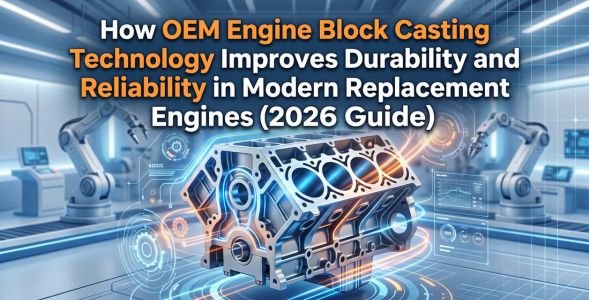
How OEM Engine Block Casting Technology Improves Durability and Reliability in Modern Replacement Engines (2026 Guide)
The engine block is the structural foundation of every internal combustion engine. Advances in OEM engine block casting technology have significantly improved durability, heat management, and overall engine reliability. In 2026, drivers replacing worn or damaged engines increasingly choose quality used engines and used engines with warranty because they offer dependable OEM engineering at a more affordable cost than purchasing a brand-new powertrain.
Table of Contents
- What is engine block casting?
- Why OEM casting technology matters
- Benefits of modern engine blocks
- Durability improvements
- Choosing the right replacement engine
- Maintenance tips
- FAQs
What Is OEM Engine Block Casting?
Engine block casting is the manufacturing process used to create the main structure of an engine.
The block houses critical internal components such as:
- Cylinders
- Crankshaft
- Pistons
- Connecting rods
- Coolant passages
- Oil galleries
OEM manufacturers use advanced casting methods to produce engine blocks that meet precise engineering specifications for strength, weight, and durability.
Why OEM Casting Technology Is Important
Modern engines operate under higher temperatures and pressures than older designs.
OEM casting technology helps ensure that engine blocks can withstand these demanding conditions while maintaining structural integrity.
Advanced manufacturing techniques provide:
- Precise dimensional accuracy
- Improved material consistency
- Greater structural strength
- Better heat resistance
- Reduced manufacturing defects
These improvements contribute directly to longer engine life.
Stronger Materials for Better Durability
Today’s OEM engine blocks are commonly manufactured using:
- High-strength cast iron
- Lightweight aluminum alloys
- Reinforced composite materials (on selected models)
These materials offer an excellent balance of:
- Durability
- Weight reduction
- Thermal performance
- Corrosion resistance
The result is an engine capable of delivering reliable performance for many years.
Improved Heat Management
Efficient temperature control is essential for engine longevity.
Modern casting technology allows manufacturers to design optimized coolant passages throughout the engine block.
Benefits include:
- Faster heat dissipation
- Reduced hot spots
- Improved combustion efficiency
- Better thermal stability
- Lower risk of overheating
Proper cooling helps protect internal engine components from premature wear.
Increased Structural Rigidity
Advanced casting methods improve the rigidity of the engine block.
A stronger block reduces:
- Engine vibration
- Component flex
- Internal stress
- Noise levels
This creates smoother engine operation while protecting bearings, crankshafts, and cylinder walls from excessive wear.
Better Machining Accuracy
OEM casting technology is combined with precision machining processes.
This ensures accurate alignment of:
- Cylinder bores
- Main bearing journals
- Crankshaft supports
- Oil passages
Precise machining improves engine efficiency while reducing internal friction.
Why Quality Used Engines Remain a Smart Choice
When replacing a failed engine, many drivers choose quality used engines because they retain the advantages of original OEM engineering.
Professionally inspected replacement engines often provide:
- OEM compatibility
- Reliable performance
- Lower replacement costs
- Proven durability
- Faster installation
Choosing an engine that was originally manufactured to OEM standards helps maintain factory performance.
Benefits of Used Engines with Warranty
Purchasing used engines with warranty offers additional peace of mind.
Warranty-backed replacement engines often include:
- Mechanical inspections
- Compression testing
- Mileage verification
- Leak testing
- Compatibility confirmation
These quality assurance measures reduce the risks associated with engine replacement while providing greater buyer confidence.
Choosing the Right Replacement Engine
Before purchasing a replacement engine, consider:
- Vehicle compatibility
- Engine code
- Production year
- Mileage
- Warranty coverage
- Supplier reputation
Working with a trusted supplier helps ensure a successful installation and dependable long-term performance.
Proper Maintenance Extends Engine Life
Even the highest-quality engine requires routine maintenance.
Recommended maintenance includes:
- Regular oil changes
- Coolant inspections
- Air filter replacement
- Timely spark plug service
- Monitoring engine temperatures
- Addressing warning lights promptly
Preventive maintenance helps maximize engine durability after installation.
Future of OEM Engine Manufacturing
Engine manufacturing continues evolving through new technologies such as:
- AI-assisted casting inspection
- Lightweight alloy development
- Precision robotic machining
- Advanced thermal management
- Improved manufacturing quality control
These innovations will continue producing stronger, more efficient replacement engines for future vehicles.
Final Thoughts
OEM engine block casting technology plays a critical role in improving the durability, reliability, and long-term performance of modern engines. Advances in materials, precision casting, and machining allow today’s engine blocks to withstand greater stress while delivering smoother operation and better thermal management.
For drivers facing engine replacement, investing in quality used engines provides the benefits of proven OEM engineering at a more affordable price. Choosing used engines with warranty adds an extra layer of confidence through professional inspections and verified mechanical condition. Combined with proper maintenance, these replacement engines can provide years of dependable service while helping restore factory-level performance.
FAQs
What is engine block casting?
Engine block casting is the manufacturing process used to produce the main structural component of an engine, housing the cylinders, crankshaft, coolant passages, and other essential internal parts.
Why is OEM engine block casting important?
OEM casting ensures precise manufacturing, superior material quality, improved strength, and reliable long-term performance that meets original factory specifications.
Are quality used engines reliable?
Yes. Professionally inspected quality used engines often provide dependable performance because they retain original OEM engineering and undergo mechanical evaluations before resale.
What are the benefits of used engines with warranty?
Used engines with warranty provide added buyer protection through verified inspections, tested mechanical condition, and warranty coverage that increases purchasing confidence.
How can I extend the life of my replacement engine?
Regular maintenance-including timely oil changes, proper cooling system care, air filter replacement, and prompt attention to warning lights-helps maximize engine lifespan and maintain reliable performance.