



Recent Blogs
- How Engine Cylinder Bore Inspection Helps Buyers Evaluate Used Engines Before Installation in 2026
- How Engine Mount Compatibility Affects Vibration Control and Replacement Engine Performance in 2026
- How Engine Block Inspection Technology Helps Buyers Identify Reliable Replacement Engines Before Purchase in 2026
- How Replacement Engine Bearing Inspection Helps Prevent Premature Wear and Improve Used Engine Reliability in 2026
- How Engine Mount Condition Influences Replacement Engine Vibration, Alignment, and Long-Term Driving Comfort in 2026
- How Engine Timing Chain Condition Influences Replacement Engine Reliability and Long-Term Performance in 2026
- Why OEM Turbocharger Compatibility Matters When Choosing a Replacement Engine in 2026
- How OEM Engine Block Casting Technology Improves Durability and Reliability in Modern Replacement Engines (2026 Guide)
- How Engine Oil Analysis Helps Drivers Predict Major Engine Problems Before They Become Expensive Repairs
- How Engine Compression Testing Helps Buyers Choose Reliable Replacement Engines in 2026
Used Engines for Sale
- ACURA Engine
- AUDI Engine
- BMW Engine
- BUICK Engine
- CADILLAC Engine
- CHEVROLET Engine
- CHRYSLER Engine
- DODGE Engine
- FIAT Engine
- FORD Engine
- GMC Engine
- HONDA Engine
- HUMMER Engine
- HYUNDAI Engine
- INFINITI Engine
- ISUZU Engine
- JAGUAR Engine
- JEEP Engine
- KIA Engine
- LANDROVER Engine
- LEXUS Engine
- LINCOLN Engine
- MAZDA Engine
- MERCEDES Engine
- MERCURY Engine
- MINI Engine
- MITSUBISHI Engine
- NISSAN Engine
- OLDSMOBILE Engine
- PONTIAC Engine
- PORSCHE Engine
- SAAB Engine
- SATURN Engine
- SCION Engine
- SUBARU Engine
- SUZUKI Engine
- TESLA Engine
- TOYOTA Engine
- VOLKSWAGEN Engine
- VOLVO Engine
Used Engines for Sale
View More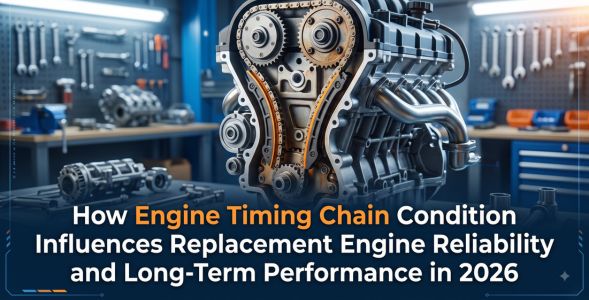
How Engine Timing Chain Condition Influences Replacement Engine Reliability and Long-Term Performance in 2026
When purchasing a replacement engine, buyers often evaluate mileage, engine compatibility, warranty coverage, and overall condition. However, one critical component that deserves closer attention is the timing chain. This internal component plays an essential role in synchronizing the crankshaft and camshaft, allowing the engine’s valves to open and close at precisely the right time.
In 2026, modern engines depend heavily on accurate valve timing to deliver fuel efficiency, lower emissions, smooth acceleration, and dependable performance. A worn or poorly maintained timing chain can affect all of these areas and may eventually lead to serious engine damage. For buyers searching for quality used engines, understanding timing chain condition can make the difference between a dependable replacement and an expensive repair.
When repairs or replacement components are necessary, properly compatible OEM used auto parts can also help maintain the original design specifications of the engine.
What Is an Engine Timing Chain?
The timing chain is a durable metal chain that connects the engine’s crankshaft and camshaft. Its primary function is to keep these components synchronized during engine operation.
The timing chain helps ensure:
- Correct valve timing
- Efficient combustion
- Smooth engine operation
- Consistent power delivery
- Proper fuel consumption
- Reliable engine starting
Because the timing system operates continuously while the engine is running, its condition can have a significant impact on overall reliability.
Why Timing Chain Condition Matters in Replacement Engines
A replacement engine can appear clean and mechanically sound while still having internal components that require inspection. Timing chain wear is one of the issues that may not be obvious from an external inspection.
Over time, the timing chain can experience wear due to:
- High mileage
- Insufficient lubrication
- Contaminated engine oil
- Excessive engine heat
- Poor maintenance
- Normal mechanical stress
As the chain wears or stretches, the precise relationship between the crankshaft and camshaft can change.
How Timing Chain Wear Affects Engine Performance
A worn timing chain may prevent the engine from maintaining precise valve timing.
This can result in:
- Rough idling
- Reduced acceleration
- Poor fuel economy
- Engine misfires
- Difficult starting
- Reduced power
- Increased emissions
Modern engines can be particularly sensitive to timing variations because electronic engine management systems continuously monitor engine operation.
Common Signs of Timing Chain Problems
Recognizing potential timing chain problems can help buyers and technicians identify issues before installation.
Common warning signs include:
- Rattling or clicking noises during startup
- Check engine warning lights
- Engine misfires
- Unstable idle
- Reduced performance
- Difficulty starting
- Poor fuel efficiency
A rattling sound from the timing area, particularly during cold starts, may indicate wear involving the chain, guides, or tensioner.
However, these symptoms can also be caused by other engine problems, so professional diagnosis is recommended.
Timing Chain Stretch and Valve Timing
Timing chains can gradually stretch as they accumulate mileage. Excessive stretch can alter valve timing and reduce combustion efficiency.
Incorrect timing may cause:
- Poor throttle response
- Reduced horsepower
- Higher fuel consumption
- Increased emissions
- Unstable engine operation
For this reason, timing chain condition should be considered when evaluating a used or replacement engine.
The Importance of Quality Used Engines
Buyers searching for quality used engines should look beyond mileage alone. A dependable replacement engine should ideally be evaluated based on:
- Engine mileage
- Engine code
- Vehicle compatibility
- Compression condition
- Maintenance history
- Inspection results
- Internal component condition
- Warranty coverage
A low-mileage engine is not automatically the best choice if its maintenance history is unknown or critical components have not been inspected.
How OEM Used Auto Parts Can Help
When timing system components require replacement, selecting compatible OEM used auto parts can be an important consideration.
OEM components are designed according to the manufacturer’s original specifications. Depending on the engine, the timing system may include:
- Timing chains
- Chain guides
- Tensioners
- Sprockets
- Seals
- Related hardware
Using correctly matched components helps support proper fitment and compatibility.
Why Timing Chain Tensioners Matter
The timing chain works together with several supporting components. One of the most important is the chain tensioner.
The tensioner maintains the appropriate amount of chain tension during engine operation.
A worn tensioner can cause:
- Excessive chain movement
- Timing irregularities
- Increased mechanical noise
- Accelerated chain wear
Therefore, inspecting the entire timing assembly is generally more effective than examining the chain alone.
Engine Oil and Timing Chain Longevity
Proper lubrication is essential for timing chain performance. Engine oil reduces friction between moving components and helps protect the chain, guides, and tensioner from excessive wear.
Following the vehicle manufacturer’s recommended oil specifications and service intervals can help maintain the timing system. Important maintenance practices include:
- Using the correct engine oil
- Replacing oil regularly
- Installing quality oil filters
- Monitoring oil levels
- Avoiding extended oil-change intervals
Poor lubrication can accelerate internal engine wear.
Timing Chain Inspection Before Engine Installation
Before installing a replacement engine, technicians can inspect the timing system for potential problems.
Depending on the engine design, inspection may include:
- Timing chain condition
- Guide condition
- Tensioner operation
- Sprocket wear
- Timing alignment
- Oil condition
- Diagnostic codes
Finding a timing problem before installation can be significantly easier and less expensive than discovering it after the engine has been installed.
Effect on Fuel Efficiency
Correct engine timing is directly connected to combustion efficiency. When valve timing is accurate, the engine can manage the intake and exhaust cycles more effectively. A worn timing system can interfere with this process and contribute to reduced efficiency.
Maintaining timing system health can therefore support:
- Better fuel economy
- Consistent engine response
- Lower emissions
- Smoother operation
Future of Engine Timing Systems
Engine timing technology continues to evolve in 2026. Modern vehicles increasingly use variable valve timing and electronically controlled systems to adjust valve operation according to driving conditions.
Future developments may include:
- Advanced timing chain materials
- Improved tensioner designs
- Predictive wear monitoring
- Sensor-based timing diagnostics
- More precise variable valve timing systems
These developments will make timing system condition even more important when evaluating replacement engines.
Final Thoughts
The timing chain is a fundamental component of modern engine operation, and its condition can have a major influence on replacement engine reliability and long-term performance. From maintaining accurate valve timing to supporting fuel efficiency and smooth power delivery, a healthy timing system is essential for dependable engine operation.
Buyers looking for quality used engines should consider timing chain condition alongside mileage, compatibility, maintenance history, inspection results, and warranty coverage. When replacement components are required, compatible OEM used auto parts can help maintain proper fitment and support the engine’s original design specifications.
A thorough inspection before installation can identify worn chains, tensioners, guides, or sprockets early. By paying attention to these components, vehicle owners can reduce unexpected failures and get more reliable performance from their replacement engine.
Frequently Asked Questions
Why is the timing chain important in an engine?
The timing chain synchronizes the crankshaft and camshaft, ensuring that the engine’s valves open and close at the correct time during combustion.
Can a worn timing chain affect engine performance?
Yes. Excessive timing chain wear or stretch can cause incorrect valve timing, leading to poor acceleration, rough idling, reduced fuel economy, misfires, and other performance problems.
What should buyers check when purchasing quality used engines?
Buyers should consider mileage, engine code, compatibility, maintenance history, compression, inspection results, internal component condition, and warranty coverage when evaluating quality used engines.
What are OEM used auto parts?
OEM used auto parts are previously used components manufactured to the original equipment specifications of a vehicle or engine. Proper compatibility should always be verified before installation.
How can timing chain life be improved?
Following recommended oil-change intervals, using the correct engine oil, maintaining proper oil levels, and addressing unusual timing-system noises or diagnostic warnings promptly can help support timing chain longevity.