


Recent Blogs
- How Engine Piston Ring Seal Inspection Helps Buyers Evaluate Oil Control and Compression in Used Engines in 2026
- How Engine Valve Train Inspection Helps Buyers Evaluate Replacement Engine Condition Before Installation in 2026
- How Engine Serial Number Verification Helps Buyers Confirm Replacement Engine Identity and Compatibility in 2026
- How Engine Cylinder Bore Inspection Helps Buyers Evaluate Used Engines Before Installation in 2026
- How Engine Mount Compatibility Affects Vibration Control and Replacement Engine Performance in 2026
- How Engine Block Inspection Technology Helps Buyers Identify Reliable Replacement Engines Before Purchase in 2026
- How Replacement Engine Bearing Inspection Helps Prevent Premature Wear and Improve Used Engine Reliability in 2026
- How Engine Mount Condition Influences Replacement Engine Vibration, Alignment, and Long-Term Driving Comfort in 2026
- How Engine Timing Chain Condition Influences Replacement Engine Reliability and Long-Term Performance in 2026
- Why OEM Turbocharger Compatibility Matters When Choosing a Replacement Engine in 2026
Used Engines for Sale
- ACURA Engine
- AUDI Engine
- BMW Engine
- BUICK Engine
- CADILLAC Engine
- CHEVROLET Engine
- CHRYSLER Engine
- DODGE Engine
- FIAT Engine
- FORD Engine
- GMC Engine
- HONDA Engine
- HUMMER Engine
- HYUNDAI Engine
- INFINITI Engine
- ISUZU Engine
- JAGUAR Engine
- JEEP Engine
- KIA Engine
- LANDROVER Engine
- LEXUS Engine
- LINCOLN Engine
- MAZDA Engine
- MERCEDES Engine
- MERCURY Engine
- MINI Engine
- MITSUBISHI Engine
- NISSAN Engine
- OLDSMOBILE Engine
- PONTIAC Engine
- PORSCHE Engine
- SAAB Engine
- SATURN Engine
- SCION Engine
- SUBARU Engine
- SUZUKI Engine
- TESLA Engine
- TOYOTA Engine
- VOLKSWAGEN Engine
- VOLVO Engine
Used Engines for Sale
View More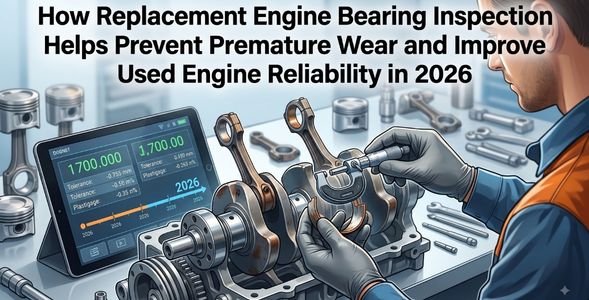
How Replacement Engine Bearing Inspection Helps Prevent Premature Wear and Improve Used Engine Reliability in 2026
When replacing an engine, most buyers focus on mileage, compatibility, overall condition, and price. However, some of the most important factors affecting long-term engine reliability are hidden inside the engine itself. Engine bearings are a good example.
Main bearings and connecting-rod bearings operate under demanding conditions every time an engine runs. They help support rotating components while maintaining the required clearance between moving surfaces. If a bearing is worn, damaged, contaminated, or incorrectly fitted, it can contribute to serious engine problems.
For buyers considering quality used engines, proper bearing inspection can therefore be an important part of evaluating replacement-engine condition. Choosing used engines with warranty can provide additional protection, but buyers should still understand what inspection and quality-control procedures are important before installation.
What Are Engine Bearings?
Engine bearings are precision components designed to support rotating engine parts. The two common types include:
- Main bearings
- Connecting-rod bearings
Main bearings support the crankshaft within the engine block, while connecting-rod bearings support the connection between the crankshaft and connecting rods.
These components are designed with precise clearances that allow engine oil to create a protective lubricating film between moving surfaces.
Why Bearing Condition Matters
Bearings experience significant loads during normal engine operation. Every combustion cycle creates forces that are transferred through the connecting rods and crankshaft. At the same time, the crankshaft rotates at high speed.
A healthy bearing system helps maintain:
- Proper oil clearance
- Smooth crankshaft rotation
- Reduced metal-to-metal contact
- Stable lubrication
- Consistent engine operation
When bearing clearance becomes excessive, oil pressure and lubrication conditions can be affected.
What Causes Bearing Wear?
Several factors can contribute to premature bearing wear. Common causes include:
- Insufficient lubrication
- Contaminated engine oil
- Excessive engine load
- Overheating
- Incorrect bearing clearance
- Poor maintenance
- Crankshaft wear
- Improper installation
In a used engine, previous operating conditions can also influence the condition of internal components. This is why inspection is valuable before an engine is installed in another vehicle.
Why Bearing Inspection Matters for Used Engines
A replacement engine may look clean externally while having internal wear that is not immediately visible. A proper inspection process can help identify potential concerns before the engine enters service.
Depending on the engine and inspection procedure, technicians may examine:
- Bearing surfaces
- Crankshaft journals
- Oil passages
- Bearing clearances
- Signs of overheating
- Metal debris
- Scoring or abnormal wear
The inspection requirements vary depending on engine design and the level of rebuilding or refurbishment performed.
Checking Bearing Clearance
Bearing clearance is one of the most important considerations. There must be enough space between the bearing and crankshaft journal for an appropriate oil film to develop. However, excessive clearance can allow too much oil leakage through the bearing interface.
Insufficient clearance can also create problems because the oil film may not be maintained properly. Measurements should therefore be performed using appropriate professional procedures and manufacturer specifications.
Inspecting Crankshaft Journals
Bearing inspection should not be limited to the bearing shells themselves. The corresponding crankshaft journals should also be examined. Technicians may look for:
- Scoring
- Scratches
- Excessive wear
- Discoloration
- Surface damage
- Irregular machining
A damaged crankshaft journal can quickly affect a newly installed bearing.
Importance of Clean Oil Passages
Engine bearings depend heavily on clean and consistent oil flow. Contamination inside an engine can move through lubrication passages and reach bearing surfaces.
Potential contaminants include:
- Metal particles
- Dirt
- Carbon deposits
- Sludge
- Coolant contamination
During engine inspection or refurbishment, appropriate cleaning of lubrication passages can help reduce the risk of contamination-related wear.
Bearing Wear and Oil Pressure
Bearing condition can influence engine lubrication behavior. Excessive internal clearances may allow increased oil flow through certain areas of the lubrication system, potentially contributing to reduced oil pressure.
Low oil pressure can then affect other components that depend on proper lubrication. For this reason, bearing condition should be considered as part of the engine’s overall lubrication system rather than as an isolated component.
How Proper Inspection Supports Reliability
Inspection does not guarantee that a replacement engine will never experience a problem. However, it can help identify known conditions before installation.
A thorough evaluation may reduce the likelihood of installing an engine with obvious internal wear. For buyers seeking quality used engines, this type of inspection can be one indicator of a supplier’s overall quality-control process.
Used Engines With Warranty
Purchasing used engines with warranty can provide additional peace of mind when replacing an engine. A warranty may provide coverage for certain failures or defects during a specified period, depending on the supplier’s terms and conditions.
However, buyers should carefully review:
- Warranty duration
- Covered components
- Labor coverage
- Installation requirements
- Maintenance requirements
- Exclusions
- Return procedures
A warranty should complement proper engine inspection rather than replace it.
Why Installation Quality Matters
Even a well-inspected replacement engine can experience premature problems if it is installed incorrectly.
Before installation, technicians should verify:
- Engine compatibility
- Mounting points
- Electrical connections
- Cooling-system condition
- Lubrication system
- Sensors
- Transmission compatibility
The vehicle’s existing systems should also be inspected because a problem outside the replacement engine can affect its operation.
Importance of Oil and Lubrication
After installation, using the correct engine oil and following the manufacturer’s maintenance recommendations are essential. Fresh oil and an appropriate filter help reduce contamination and maintain lubrication.
Regular oil changes can help protect bearings and other internal components throughout the engine’s service life.
Signs of Possible Bearing Problems
Drivers should take unusual engine symptoms seriously. Potential warning signs can include:
- Knocking sounds
- Low oil pressure
- Excessive metal particles in oil
- Unusual engine vibration
- Reduced performance
- Oil-pressure warning lights
These symptoms can have multiple causes, so professional diagnosis is recommended rather than assuming that the bearings are responsible.
Future of Replacement Engine Inspection
Engine suppliers and rebuilders are increasingly using more detailed inspection processes. Future inspection methods may involve:
- Digital measurement records
- Automated dimensional inspection
- Advanced surface analysis
- Improved component tracking
- Predictive wear assessment
These technologies can help suppliers document engine condition more consistently.
Final Thoughts
Replacement engine bearing inspection is an important part of evaluating engine condition because bearings operate under continuous mechanical and lubrication loads. Checking bearing surfaces, crankshaft journals, oil passages, and clearances can help identify potential problems before a replacement engine is installed.
For buyers searching for quality used engines, choosing a supplier with a documented inspection and quality-control process can provide greater confidence. Selecting used engines with warranty can also provide additional protection, provided the warranty terms are clearly understood.
Ultimately, replacement-engine reliability depends on more than the condition of one component. Correct compatibility, professional installation, proper lubrication, cooling-system health, regular maintenance, and careful inspection all contribute to long-term performance.
A thorough bearing inspection is therefore not simply a technical step—it is part of a larger process for ensuring that a replacement engine is prepared to deliver dependable service in 2026 and beyond.