



Recent Blogs
- How Engine Serial Number Verification Helps Buyers Confirm Replacement Engine Identity and Compatibility in 2026
- How Engine Cylinder Bore Inspection Helps Buyers Evaluate Used Engines Before Installation in 2026
- How Engine Mount Compatibility Affects Vibration Control and Replacement Engine Performance in 2026
- How Engine Block Inspection Technology Helps Buyers Identify Reliable Replacement Engines Before Purchase in 2026
- How Replacement Engine Bearing Inspection Helps Prevent Premature Wear and Improve Used Engine Reliability in 2026
- How Engine Mount Condition Influences Replacement Engine Vibration, Alignment, and Long-Term Driving Comfort in 2026
- How Engine Timing Chain Condition Influences Replacement Engine Reliability and Long-Term Performance in 2026
- Why OEM Turbocharger Compatibility Matters When Choosing a Replacement Engine in 2026
- How OEM Engine Block Casting Technology Improves Durability and Reliability in Modern Replacement Engines (2026 Guide)
- How Engine Oil Analysis Helps Drivers Predict Major Engine Problems Before They Become Expensive Repairs
Used Engines for Sale
- ACURA Engine
- AUDI Engine
- BMW Engine
- BUICK Engine
- CADILLAC Engine
- CHEVROLET Engine
- CHRYSLER Engine
- DODGE Engine
- FIAT Engine
- FORD Engine
- GMC Engine
- HONDA Engine
- HUMMER Engine
- HYUNDAI Engine
- INFINITI Engine
- ISUZU Engine
- JAGUAR Engine
- JEEP Engine
- KIA Engine
- LANDROVER Engine
- LEXUS Engine
- LINCOLN Engine
- MAZDA Engine
- MERCEDES Engine
- MERCURY Engine
- MINI Engine
- MITSUBISHI Engine
- NISSAN Engine
- OLDSMOBILE Engine
- PONTIAC Engine
- PORSCHE Engine
- SAAB Engine
- SATURN Engine
- SCION Engine
- SUBARU Engine
- SUZUKI Engine
- TESLA Engine
- TOYOTA Engine
- VOLKSWAGEN Engine
- VOLVO Engine
Used Engines for Sale
View More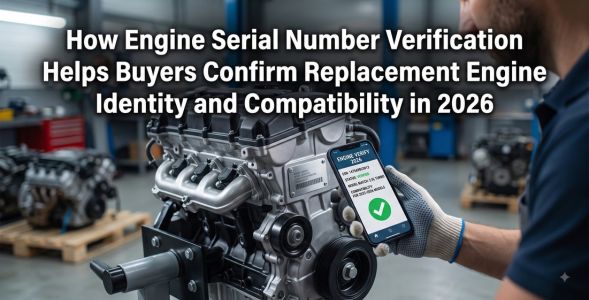
How Engine Serial Number Verification Helps Buyers Confirm Replacement Engine Identity and Compatibility in 2026
Choosing the correct replacement engine requires more than matching a vehicle’s make, model, and year. Engine identification details can provide additional information that helps buyers verify whether a replacement unit corresponds with their vehicle’s requirements. Whether comparing remanufactured engines or quality used engines, checking the engine serial number can be an important step before purchase and installation. In 2026, better digital inventory systems and vehicle identification tools are making engine verification more accessible, helping buyers reduce compatibility mistakes and improve confidence when sourcing replacement powertrains.
What Is an Engine Serial Number?
An engine serial number is an identification code assigned to an engine by its manufacturer or production facility. Depending on the manufacturer and engine family, the identification marking may help distinguish one engine from another.
An engine may also have additional identification information, such as:
- Engine family code
- Casting numbers
- Part numbers
- Production codes
- Model codes
- Emissions information
The exact format and location vary between manufacturers and engine designs.
Why Engine Identification Matters
A vehicle can have multiple engine options available for the same model year. Differences may involve:
- Engine displacement
- Fuel system
- Power output
- Emissions equipment
- Transmission compatibility
- Electronic controls
- Mounting configuration
- Accessory arrangement
As a result, relying only on the vehicle’s year and model may not always be sufficient to identify the correct replacement engine. Serial-number verification provides another layer of identification.
Serial Number vs. Engine Part Number
These terms are sometimes confused, but they serve different purposes. An engine serial number generally identifies a specific engine or production unit.
A part number identifies a component or configuration used by the manufacturer. Other markings may identify:
- Engine family
- Casting
- Manufacturing batch
- Replacement components
When purchasing a replacement engine, buyers should understand which identification number the supplier is requesting and why.
How Serial Number Verification Supports Compatibility
Compatibility involves more than whether an engine can physically fit inside a vehicle. A replacement engine may need to work with:
- Engine mounts
- Transmission
- Wiring harness
- Sensors
- ECU
- Exhaust system
- Cooling system
- Fuel system
- Intake system
Serial-number information can help suppliers identify the correct engine family and configuration before recommending a replacement unit. However, the serial number should be considered alongside the vehicle’s VIN and other specifications.
Why VIN Information Still Matters
The Vehicle Identification Number provides detailed information about a specific vehicle. A VIN may help identify:
- Vehicle model
- Production year
- Factory configuration
- Drivetrain
- Engine-related specifications
For replacement-engine sourcing, providing both VIN information and available engine identification details can give a supplier a more complete picture. This combination can reduce the likelihood of ordering an incompatible unit.
Verifying Quality Used Engines
Buyers searching for quality used engines should ask suppliers for appropriate identification information before purchasing. Useful information may include:
- Engine serial number
- Engine family
- Mileage or operating history when available
- Donor vehicle information
- Compatibility details
- Testing information
- Warranty terms
A reputable supplier should be able to explain what information is available for the specific engine being offered.
Serial Verification for Remanufactured Engines
The same principle applies when evaluating remanufactured engines. A remanufactured engine may contain rebuilt or replaced internal and external components according to a defined remanufacturing process.
Buyers should confirm:
- The remanufacturer’s specifications
- Engine identification
- Included components
- Warranty coverage
- Compatibility
- Installation requirements
The original engine identification may remain relevant, but remanufacturing can involve component changes, so buyers should also verify the final configuration supplied.
Why Digital Inventory Systems Matter in 2026
Modern engine suppliers increasingly use digital inventory databases to organize replacement powertrains.
These systems can connect information such as:
- Engine identification numbers
- VIN compatibility
- Vehicle applications
- Engine specifications
- Inventory location
- Warranty information
Digital matching can make the sourcing process more efficient. However, automated matching should still be verified against manufacturer specifications and supplier documentation.
Identifying Incorrect Engine Listings
Serial-number verification can help buyers identify potential discrepancies in online listings.
For example, a listing may describe an engine using a broad vehicle application while the actual engine has a different configuration.
Before purchasing, buyers should compare:
- Engine serial number
- Engine family
- Part number where applicable
- Vehicle VIN
- Engine displacement
- Model year
- Transmission requirements
- Emissions configuration
If the information does not match, the buyer should ask the supplier for clarification.
Engine Compatibility and Electronic Systems
Modern vehicles depend heavily on electronic control systems. Even if two engines appear physically similar, they may differ in:
- Sensors
- Wiring
- Electronic throttle systems
- ECU compatibility
- Emissions controls
- Variable valve timing components
This is another reason identification and compatibility checks are important before installation. Some replacement engines may require transferring compatible external components from the original engine, depending on the vehicle and replacement unit.
What Buyers Should Ask Before Purchasing
Before ordering a replacement engine, buyers can ask the supplier:
- What is the engine serial number?
- What engine family does it belong to?
- What vehicle did it come from?
- What is the engine’s displacement?
- Is it compatible with my VIN?
- What components are included?
- Has the engine been tested?
- What warranty is provided?
- Are additional components required for installation?
Clear answers can help reduce uncertainty before payment and installation.
Common Mistakes to Avoid
Buyers should avoid purchasing an engine based only on:
- Vehicle make
- Vehicle model
- Engine size
- Low price
- Stock photographs
They should instead verify the actual unit and its specifications. Stock images can be particularly misleading because external components may differ between engine configurations.
Why Supplier Documentation Matters
Documentation provides useful evidence of what is being sold. For quality used engines, documentation may include identification details, donor information, testing records, and warranty conditions.
For remanufactured engines, buyers may also want information about the remanufacturing process, replaced components, testing procedures, and warranty coverage. The level of documentation varies between suppliers
Final Thoughts
Engine serial number verification provides an additional layer of protection when sourcing a replacement engine. It can help buyers and suppliers identify the correct engine family, compare configurations, and investigate compatibility before installation.
Whether purchasing remanufactured engines or quality used engines, buyers should combine engine identification information with the vehicle VIN, manufacturer specifications, engine configuration, and supplier documentation.
In 2026, digital inventory and compatibility systems are making this verification process more efficient, but careful human review remains important. Taking the time to verify the actual engine before purchase can help reduce ordering errors, installation complications, and unexpected compatibility issues.
FAQs
What is an engine serial number?
An engine serial number is an identification code associated with a specific engine or production unit. Its format and location vary by manufacturer.
Is an engine serial number enough to confirm compatibility?
Not always. Buyers should also compare the vehicle VIN, engine family, configuration, part numbers, emissions requirements, and manufacturer specifications.
Should I verify a used engine before buying it?
Yes. Buyers looking for quality used engines should verify engine identification, compatibility, available history, testing information, and warranty terms before purchase.
How does serial verification help with remanufactured engines?
For remanufactured engines, identification information can help confirm the engine family and configuration, while buyers should also review remanufacturing specifications and warranty documentation.
Can two engines have the same vehicle application but different configurations?
Yes. The same vehicle model can sometimes be offered with different engines, transmissions, emissions configurations, or electronic systems.
What information should I provide to an engine supplier?
Provide the vehicle VIN, year, make, model, engine details, and any identification numbers or markings available on the original engine.