



Recent Blogs
- How Engine Valve Train Inspection Helps Buyers Evaluate Replacement Engine Condition Before Installation in 2026
- How Engine Serial Number Verification Helps Buyers Confirm Replacement Engine Identity and Compatibility in 2026
- How Engine Cylinder Bore Inspection Helps Buyers Evaluate Used Engines Before Installation in 2026
- How Engine Mount Compatibility Affects Vibration Control and Replacement Engine Performance in 2026
- How Engine Block Inspection Technology Helps Buyers Identify Reliable Replacement Engines Before Purchase in 2026
- How Replacement Engine Bearing Inspection Helps Prevent Premature Wear and Improve Used Engine Reliability in 2026
- How Engine Mount Condition Influences Replacement Engine Vibration, Alignment, and Long-Term Driving Comfort in 2026
- How Engine Timing Chain Condition Influences Replacement Engine Reliability and Long-Term Performance in 2026
- Why OEM Turbocharger Compatibility Matters When Choosing a Replacement Engine in 2026
- How OEM Engine Block Casting Technology Improves Durability and Reliability in Modern Replacement Engines (2026 Guide)
Used Engines for Sale
- ACURA Engine
- AUDI Engine
- BMW Engine
- BUICK Engine
- CADILLAC Engine
- CHEVROLET Engine
- CHRYSLER Engine
- DODGE Engine
- FIAT Engine
- FORD Engine
- GMC Engine
- HONDA Engine
- HUMMER Engine
- HYUNDAI Engine
- INFINITI Engine
- ISUZU Engine
- JAGUAR Engine
- JEEP Engine
- KIA Engine
- LANDROVER Engine
- LEXUS Engine
- LINCOLN Engine
- MAZDA Engine
- MERCEDES Engine
- MERCURY Engine
- MINI Engine
- MITSUBISHI Engine
- NISSAN Engine
- OLDSMOBILE Engine
- PONTIAC Engine
- PORSCHE Engine
- SAAB Engine
- SATURN Engine
- SCION Engine
- SUBARU Engine
- SUZUKI Engine
- TESLA Engine
- TOYOTA Engine
- VOLKSWAGEN Engine
- VOLVO Engine
Used Engines for Sale
View More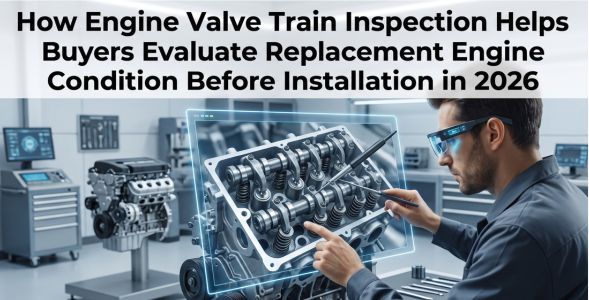
How Engine Valve Train Inspection Helps Buyers Evaluate Replacement Engine Condition Before Installation in 2026
Buying a replacement engine requires careful evaluation before installation, especially when the engine’s internal condition is not immediately visible. Valve train inspection provides useful information about components responsible for controlling intake and exhaust valve movement. Buyers searching for quality used engines can use valve train condition as one factor when assessing an engine’s maintenance history and potential condition. Likewise, suppliers offering used engines with warranty can provide additional purchase confidence when inspection findings are supported by appropriate documentation and warranty terms.
What Is the Engine Valve Train?
The valve train is the group of components responsible for opening and closing an engine’s intake and exhaust valves at the correct time. Depending on the engine design, the valve train may include:
- Camshaft
- Camshaft lobes
- Lifters or tappets
- Rocker arms
- Pushrods
- Valve springs
- Retainers
- Valves
- Related guides and components
The exact configuration varies by engine design. Because these components operate repeatedly while the engine is running, their condition can provide valuable clues about internal wear.
Why Valve Train Inspection Matters Before Installation
Once a replacement engine has been installed, discovering an internal problem can make repairs significantly more complicated. Pre-installation inspection can help identify visible signs of:
- Excessive wear
- Scoring
- Corrosion
- Oil contamination
- Broken components
- Abnormal deposits
- Mechanical damage
Finding potential problems before installation gives buyers and technicians an opportunity to investigate the engine further.
Inspecting Camshaft Condition
The camshaft controls valve movement through its lobes and related valve train components. During inspection, technicians may look for:
- Worn camshaft lobes
- Surface scoring
- Pitting
- Abnormal discoloration
- Damage around bearing surfaces
Uneven or excessive camshaft wear may indicate lubrication problems, extended service intervals, or other mechanical issues. Camshaft inspection should be performed according to the engine manufacturer’s specifications.
Checking Rocker Arms and Pushrods
In engines using rocker arms and pushrods, these components transfer movement from the camshaft to the valves. Technicians can inspect them for:
- Bending
- Excessive wear
- Surface damage
- Loose components
- Abnormal contact patterns
A damaged pushrod or rocker arm may indicate a previous valve train problem. Buyers should ensure that replacement components match the engine’s specific configuration.
Inspecting Valve Springs
Valve springs must maintain appropriate pressure to control valve movement. During inspection, technicians may check for:
- Broken springs
- Corrosion
- Incorrect spring height
- Visible deformation
- Signs of fatigue
Spring condition can be particularly important when evaluating an engine that has been stored for an extended period. However, visual inspection alone cannot identify every spring-related issue. Measurement against manufacturer specifications may be required.
Looking for Oil-Related Problems
The valve train relies heavily on adequate lubrication. During inspection, technicians can look for signs such as:
- Heavy sludge
- Excessive varnish
- Burnt oil deposits
- Dry contact surfaces
- Unusual discoloration
Significant deposits may provide clues about previous oil-change practices or operating conditions. This information can help buyers determine whether additional internal inspection is appropriate before installation.
Understanding Valve Train Wear Patterns
Normal wear generally develops gradually, while unusual wear patterns may indicate specific mechanical problems. For example, uneven camshaft lobe wear could point toward lubrication or component-related issues.
Similarly, unusual contact marks on rocker arms may indicate alignment or lubrication concerns. For buyers comparing quality used engines, understanding these inspection findings can help them ask more informed questions about engine history and condition.
Connecting Inspection With Engine History
Valve train inspection becomes more useful when combined with available engine documentation. Buyers can ask suppliers about:
- Vehicle history
- Mileage information
- Engine identification
- Previous maintenance
- Inspection procedures
- Storage conditions
- Compression testing
- Leak-down testing
No single inspection provides a complete picture of an engine’s condition. Combining mechanical inspection with documented information creates a more comprehensive evaluation.
Why Warranty Coverage Matters
Inspection helps identify potential issues, but warranty coverage can provide another layer of purchase protection. When evaluating used engines with warranty, buyers should review exactly what the warranty covers. Important details may include:
- Warranty duration
- Covered components
- Labor coverage
- Installation requirements
- Return conditions
- Exclusions
- Claim procedures
A warranty should not replace mechanical inspection, but clear warranty terms can help buyers understand their protection after purchase.
Preparing a Replacement Engine Before Installation
Even after inspection, technicians should follow the manufacturer’s installation procedures. Depending on the engine and application, preparation may involve checking:
- Fluids
- Seals and gaskets
- Timing components
- Mounting points
- Sensors
- Accessories
- Wiring connections
- Cooling components
The replacement engine should also be verified for compatibility with the vehicle before installation begins.
Avoiding Common Inspection Mistakes
Buyers should avoid relying only on external appearance. An engine may look clean externally while having internal wear that requires further investigation.
Common mistakes include:
- Skipping identification verification
- Ignoring oil deposits
- Failing to inspect valve train components
- Assuming low mileage guarantees condition
- Ignoring manufacturer specifications
- Not reviewing warranty terms
A systematic inspection process can provide better information before installation.
Final Thoughts
Engine valve train inspection can provide valuable insight into the internal condition of a replacement engine before it is installed. Examining camshafts, rocker arms, pushrods, valve springs, lubrication evidence, and other components can help identify potential wear or damage that may otherwise remain hidden.
For buyers searching for quality used engines, valve train inspection should be considered alongside engine identification, testing, maintenance history, and compatibility information. When purchasing used engines with warranty, reviewing the warranty’s coverage and installation requirements can provide additional clarity.
A careful pre-installation evaluation can help buyers and technicians make better-informed decisions and reduce the risk of discovering avoidable mechanical problems after installation.
FAQs
What is a valve train inspection?
A valve train inspection examines components responsible for controlling engine valve movement, including camshafts, lifters, rocker arms, pushrods, and valve springs, depending on the engine design.
Why inspect the valve train before installing a replacement engine?
It can help identify visible wear, damage, corrosion, deposits, or other conditions that may require further investigation before installation.
Does valve train inspection guarantee engine reliability?
No. It is one part of an overall engine evaluation. Compression testing, leak-down testing, identification verification, documentation, and other inspections may also be appropriate.
What should buyers check when purchasing used engines with warranty?
Buyers should review warranty duration, covered components, exclusions, installation requirements, labor coverage, return conditions, and claim procedures.
Are quality used engines always free from internal wear?
No. Used engines have previous operating histories, so condition should be evaluated using appropriate inspections, testing, documentation, and supplier information.