



Recent Blogs
- How Engine Piston Ring Seal Inspection Helps Buyers Evaluate Oil Control and Compression in Used Engines in 2026
- How Engine Valve Train Inspection Helps Buyers Evaluate Replacement Engine Condition Before Installation in 2026
- How Engine Serial Number Verification Helps Buyers Confirm Replacement Engine Identity and Compatibility in 2026
- How Engine Cylinder Bore Inspection Helps Buyers Evaluate Used Engines Before Installation in 2026
- How Engine Mount Compatibility Affects Vibration Control and Replacement Engine Performance in 2026
- How Engine Block Inspection Technology Helps Buyers Identify Reliable Replacement Engines Before Purchase in 2026
- How Replacement Engine Bearing Inspection Helps Prevent Premature Wear and Improve Used Engine Reliability in 2026
- How Engine Mount Condition Influences Replacement Engine Vibration, Alignment, and Long-Term Driving Comfort in 2026
- How Engine Timing Chain Condition Influences Replacement Engine Reliability and Long-Term Performance in 2026
- Why OEM Turbocharger Compatibility Matters When Choosing a Replacement Engine in 2026
Used Engines for Sale
- ACURA Engine
- AUDI Engine
- BMW Engine
- BUICK Engine
- CADILLAC Engine
- CHEVROLET Engine
- CHRYSLER Engine
- DODGE Engine
- FIAT Engine
- FORD Engine
- GMC Engine
- HONDA Engine
- HUMMER Engine
- HYUNDAI Engine
- INFINITI Engine
- ISUZU Engine
- JAGUAR Engine
- JEEP Engine
- KIA Engine
- LANDROVER Engine
- LEXUS Engine
- LINCOLN Engine
- MAZDA Engine
- MERCEDES Engine
- MERCURY Engine
- MINI Engine
- MITSUBISHI Engine
- NISSAN Engine
- OLDSMOBILE Engine
- PONTIAC Engine
- PORSCHE Engine
- SAAB Engine
- SATURN Engine
- SCION Engine
- SUBARU Engine
- SUZUKI Engine
- TESLA Engine
- TOYOTA Engine
- VOLKSWAGEN Engine
- VOLVO Engine
Used Engines for Sale
View More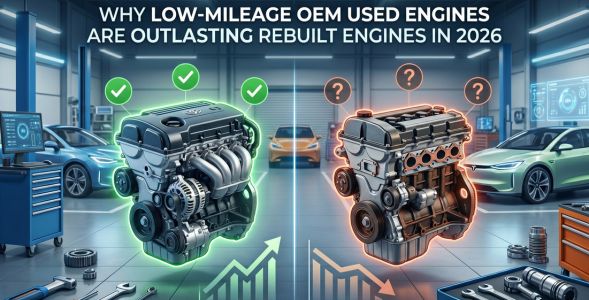
Why Low-Mileage OEM Used Engines Are Outlasting Rebuilt Engines in 2026
In 2026, vehicle owners are becoming more strategic about major repair decisions, especially when engine replacement is involved. Rising repair costs, longer vehicle ownership periods, and increasing demand for reliable transportation have pushed consumers to carefully evaluate their options. One debate that continues to gain attention is whether a low-mileage OEM used engine or a rebuilt engine offers better long-term value.
While rebuilt engines have traditionally been viewed as a dependable solution, many automotive experts and repair professionals are noticing a growing trend: low-mileage OEM used auto parts, particularly engines, are often delivering greater reliability and longer service life than many rebuilt alternatives. As a result, demand for quality used engines has increased significantly across the automotive repair industry.
Understanding why this shift is happening can help vehicle owners make smarter and more cost-effective engine replacement decisions.
Understanding the Difference Between OEM Used Engines and Rebuilt Engines
Before comparing performance and longevity, it’s important to understand how these engine options differ.
OEM Used Engines
OEM (Original Equipment Manufacturer) used engines are factory-built engines removed from donor vehicles.
These engines typically come from:
- Accident-damaged vehicles
- Insurance write-offs
- Fleet retirements
- Salvage auctions
A low-mileage OEM engine remains largely untouched and retains its original factory assembly.
Rebuilt Engines
Rebuilt engines are existing engines that have been disassembled, inspected, repaired, and reassembled.
The rebuilding process may include replacing:
- Bearings
- Gaskets
- Pistons
- Seals
- Timing components
The quality of a rebuilt engine often depends heavily on the technician, parts used, and rebuilding standards.
Why Low-Mileage OEM Engines Are Gaining Popularity
Many vehicle owners now prefer quality used engines because they preserve original factory engineering.
Factory-built engines are assembled using highly controlled manufacturing processes that ensure:
- Precise tolerances
- Consistent quality
- Reliable performance
- Long-term durability
When a low-mileage engine is sourced from a well-maintained vehicle, it often retains much of its original lifespan.
Factory Assembly Standards Matter
Automakers invest billions of dollars in engine manufacturing technology.
OEM engines are assembled using:
- Robotic precision
- Advanced quality control systems
- Automated testing procedures
- Strict engineering specifications
These factory conditions are difficult for most rebuilding operations to replicate.
As a result, many low-mileage OEM engines continue to perform exceptionally well even after years of use.
Reduced Risk of Assembly Errors
Rebuilding an engine involves extensive disassembly and reassembly.
Each step introduces opportunities for:
- Improper torque specifications
- Incorrect clearances
- Installation mistakes
- Component mismatches
Even experienced technicians can encounter challenges during the rebuilding process.
Low-mileage OEM engines avoid many of these risks because the original factory assembly remains intact.
Consistent Performance and Reliability
One reason OEM used auto parts continue growing in popularity is their predictable performance.
Drivers often report:
- Smooth engine operation
- Consistent fuel efficiency
- Reliable power delivery
- Fewer unexpected issues
Because the engine was originally designed and assembled as a complete unit, compatibility between components remains intact.
Modern Engines Last Longer Than Ever
Today’s engines are built to last significantly longer than previous generations.
Many modern powertrains can exceed:
- 200,000 miles
- 250,000 miles
- 300,000 miles
with proper maintenance.
A low-mileage used engine with 40,000 to 70,000 miles may still have the majority of its service life remaining.
This makes it an attractive replacement option.
Lower Cost Without Sacrificing Quality
Cost remains one of the primary reasons drivers choose quality used engines.
Compared to rebuilt engines, low-mileage OEM units often provide:
- Lower purchase prices
- Faster availability
- Reduced labor costs
- Less downtime
Vehicle owners can restore performance while staying within budget.
Better Compatibility With Modern Electronics
Modern engines rely heavily on integrated electronics. Examples include:
- Engine control modules
- Fuel injection systems
- Variable valve timing
- Turbocharger controls
- Emissions systems
Because OEM engines retain their original configurations, they often integrate more smoothly with existing vehicle electronics.
This can reduce installation challenges and improve long-term reliability.
Growing Trust in OEM Used Auto Parts
The automotive recycling industry has evolved significantly.
Today’s suppliers use advanced methods to verify:
- Engine mileage
- Vehicle history
- Mechanical condition
- Compatibility
As a result, buyers have greater confidence in purchasing OEM used auto parts than ever before.
Many suppliers now offer detailed inspection reports and warranty coverage.
Environmental Benefits of OEM Engine Reuse
Sustainability is becoming an increasingly important factor in automotive repairs.
Reusing engines helps:
- Reduce manufacturing demand
- Lower raw material consumption
- Decrease landfill waste
- Support circular economy initiatives
Choosing a low-mileage used engine extends the life of existing resources while reducing environmental impact.
Why Some Rebuilt Engines Struggle
While many rebuilt engines perform well, not all rebuilds are equal.
Common challenges include:
- Variations in workmanship
- Inconsistent replacement parts
- Incomplete component replacement
- Improper machining
The quality of the rebuild depends largely on the rebuilder’s expertise and standards.
This variability can sometimes affect long-term durability.
Faster Availability in 2026
Supply chain challenges continue affecting the automotive industry.
Many rebuilt engines require
- Core acquisition
- Machine work
- Parts sourcing
- Extended labor time
In contrast, low-mileage OEM engines are often ready for immediate shipment and installation.
This reduces repair delays and vehicle downtime.
Ideal Vehicles for OEM Used Engine Replacement
Low-mileage used engines are particularly beneficial for:
- Daily Drivers: Cost-effective transportation solutions.
- Trucks and SUVs: High-value vehicles with otherwise healthy drivetrains.
- Fleet Vehicles: Businesses seeking affordable repairs.
- Performance Vehicles: Drivers wanting to preserve factory-engineered performance.
How to Choose a Quality Used Engine
When shopping for replacement engines, buyers should verify:
- Mileage records
- Warranty availability
- Vehicle history
- Inspection documentation
- Supplier reputation
Reliable suppliers help ensure that buyers receive genuine quality used engines capable of delivering long-term performance.
Future Trends in Engine Replacement
Industry experts expect continued growth in the OEM engine market due to:
- Improved vehicle longevity
- Better inspection technologies
- Expanded warranty programs
- Increased consumer awareness
- Rising new engine costs
These factors continue making OEM engine replacement an attractive solution.
Final Thoughts
In 2026, low-mileage OEM used engines are increasingly outperforming rebuilt engines in terms of reliability, consistency, availability, and overall value. Thanks to original factory assembly standards, proven durability, and improved quality verification processes, OEM used auto parts are becoming the preferred choice for many vehicle owners and repair professionals.
For drivers seeking dependable and cost-effective engine replacement solutions, quality used engines offer an excellent combination of performance, longevity, and affordability. As automotive technology continues evolving, the demand for low-mileage OEM engine replacements is expected to grow even further.