



Recent Blogs
- How Engine Piston Ring Seal Inspection Helps Buyers Evaluate Oil Control and Compression in Used Engines in 2026
- How Engine Valve Train Inspection Helps Buyers Evaluate Replacement Engine Condition Before Installation in 2026
- How Engine Serial Number Verification Helps Buyers Confirm Replacement Engine Identity and Compatibility in 2026
- How Engine Cylinder Bore Inspection Helps Buyers Evaluate Used Engines Before Installation in 2026
- How Engine Mount Compatibility Affects Vibration Control and Replacement Engine Performance in 2026
- How Engine Block Inspection Technology Helps Buyers Identify Reliable Replacement Engines Before Purchase in 2026
- How Replacement Engine Bearing Inspection Helps Prevent Premature Wear and Improve Used Engine Reliability in 2026
- How Engine Mount Condition Influences Replacement Engine Vibration, Alignment, and Long-Term Driving Comfort in 2026
- How Engine Timing Chain Condition Influences Replacement Engine Reliability and Long-Term Performance in 2026
- Why OEM Turbocharger Compatibility Matters When Choosing a Replacement Engine in 2026
Used Engines for Sale
- ACURA Engine
- AUDI Engine
- BMW Engine
- BUICK Engine
- CADILLAC Engine
- CHEVROLET Engine
- CHRYSLER Engine
- DODGE Engine
- FIAT Engine
- FORD Engine
- GMC Engine
- HONDA Engine
- HUMMER Engine
- HYUNDAI Engine
- INFINITI Engine
- ISUZU Engine
- JAGUAR Engine
- JEEP Engine
- KIA Engine
- LANDROVER Engine
- LEXUS Engine
- LINCOLN Engine
- MAZDA Engine
- MERCEDES Engine
- MERCURY Engine
- MINI Engine
- MITSUBISHI Engine
- NISSAN Engine
- OLDSMOBILE Engine
- PONTIAC Engine
- PORSCHE Engine
- SAAB Engine
- SATURN Engine
- SCION Engine
- SUBARU Engine
- SUZUKI Engine
- TESLA Engine
- TOYOTA Engine
- VOLKSWAGEN Engine
- VOLVO Engine
Used Engines for Sale
View More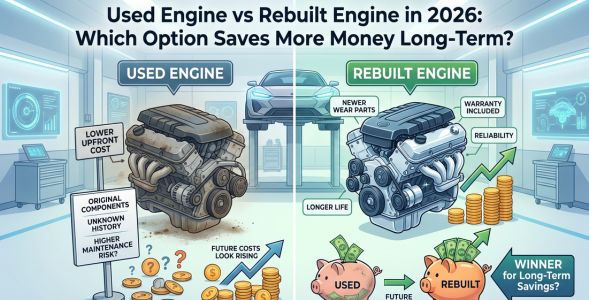
Used Engine vs Rebuilt Engine in 2026: Which Option Saves More Money Long-Term?
Engine replacement costs continue rising in 2026 as modern vehicles become more advanced and expensive to repair. Whether due to overheating, internal wear, oil starvation, or catastrophic engine failure, many drivers eventually face one important question:
Should you buy a used engine or invest in a rebuilt engine?
Both options can save thousands compared to purchasing a brand-new engine, but they differ greatly in:
- Cost
- Reliability
- Warranty coverage
- Lifespan
- Performance
- Installation requirements
As more vehicle owners search online for used engines for sale and compare them with remanufactured engines, understanding the long-term value of each option has become increasingly important.
This guide explains the major differences between used and rebuilt engines and which choice may save more money over time in 2026.
What Is a Used Engine?
A used engine is an original OEM engine removed from another vehicle.
Most used engines come from:
- Salvage vehicles
- Insurance write-offs
- Low-mileage wrecked cars
- Recycled automotive inventory
These engines are usually sold:
- As-is
- With limited testing
- With basic warranty coverage
Many drivers choose used engines because they are significantly cheaper than rebuilding or buying new.
What Is a Rebuilt or Remanufactured Engine?
A rebuilt engine, often referred to as a remanufactured engine, is an engine that has been:
- Completely disassembled
- Inspected
- Cleaned
- Machined
- Repaired using replacement parts
Commonly replaced components include:
- Pistons
- Bearings
- Seals
- Gaskets
- Timing components
- Oil pumps
Remanufactured engines are restored to meet factory performance standards.
Why Engine Replacement Costs Are Rising in 2026
Modern engines now contain:
- Turbochargers
- Direct injection systems
- Electronic valve timing
- Hybrid integration components
- Advanced cooling systems
These technologies improve efficiency but increase repair complexity and labor costs.
This is why many drivers now search for affordable:
- Used engines for sale
- Certified replacement engines
- Remanufactured engines
to reduce overall repair expenses.
Major Cost Difference Between Used and Rebuilt Engines
Used Engines
Used engines are usually:
- Less expensive upfront
- Faster to source
- Easier to install
Prices vary based on:
- Mileage
- Vehicle model
- Availability
- Market demand
Remanufactured Engines
Remanufactured engines cost more because:
- Internal components are replaced
- Extensive labor is involved
- Quality testing is performed
- Performance standards are restored
However, they often provide better long-term reliability.
Which Option Has Better Reliability?
Used Engines
Reliability depends heavily on:
- Previous maintenance history
- Mileage
- Engine condition
- Storage quality
Some low-mileage used engines perform extremely well for years, while others may develop hidden problems quickly.
Remanufactured Engines
Rebuilt engines are generally more reliable because:
- Worn parts are replaced
- Internal tolerances are restored
- Components are tested carefully
Many remanufactured engines perform similarly to new engines when installed properly.
Warranty Coverage Differences
Warranty protection is a major factor when comparing engine options.
Used Engines
Most used engines include:
- Limited warranties
- Short coverage periods
- Basic startup guarantees
Remanufactured Engines
Most remanufactured engines offer:
- Longer warranties
- Better coverage terms
- More comprehensive protection
Longer warranty coverage often provides additional peace of mind.
Why Used Engines Remain Popular
Despite some risks, used engines continue growing in popularity because they offer:
- Lower upfront costs
- OEM factory compatibility
- Faster availability
- Good performance for budget repairs
Many drivers simply need an affordable solution to keep older vehicles running.
Benefits of Buying Used Engines for Sale
Drivers searching for used engines for sale often benefit from:
- Lower repair bills
- Faster replacement turnaround
- OEM engineering quality
- Better affordability than rebuilding
Low-mileage salvage engines can provide excellent value when sourced from reputable suppliers.
Why Remanufactured Engines Cost More
The rebuilding process includes:
- Precision machining
- Complete cleaning
- Component replacement
- Quality inspection
- Performance testing
This extensive restoration process increases:
- Labor costs
- Production time
- Overall pricing
However, it also improves long-term durability.
Fuel Efficiency Considerations
Engine condition affects:
- Fuel economy
- Combustion efficiency
- Oil consumption
- Emissions performance
Worn used engines may:
- Burn more fuel
- Consume oil
- Produce lower performance
Remanufactured engines typically restore factory-level efficiency more effectively.
Installation Costs Matter Too
Labor costs for engine replacement are significant regardless of engine type.
Drivers should also consider:
- Installation fees
- Fluid replacement
- Cooling system repairs
- ECU programming
- Sensor replacements
Installing a lower-quality engine may create additional repair costs later.
Which Option Saves More Long-Term?
Used Engines Save More If:
- Budget is limited
- Vehicle value is lower
- Low-mileage engines are available
- Short-term ownership is planned
Remanufactured Engines Save More If:
- Long-term reliability matters
- Vehicle will be kept for many years
- Warranty protection is important
- Maximum performance is desired
The best option depends on the vehicle owner’s long-term goals.
Why OEM Compatibility Matters
OEM engine compatibility helps ensure:
- Proper fitment
- Better sensor communication
- Reliable ECU integration
- Easier installation
This is why many drivers avoid aftermarket engine modifications and prefer OEM-based replacement solutions.
Common Mistakes Buyers Make
Many engine buyers make costly mistakes such as:
- Choosing engines without warranty
- Ignoring mileage history
- Skipping compression testing
- Buying from unreliable sellers
- Failing to inspect maintenance records
Careful research helps avoid expensive future problems.
Importance of Engine Inspections
Before purchasing replacement engines, drivers should verify:
- Compression readings
- Oil condition
- Cooling system history
- Leak inspection results
- Warranty details
A properly inspected engine reduces long-term repair risks.
Why Engine Demand Is Increasing in 2026
More drivers now keep vehicles longer because:
- New car prices are rising
- Interest rates remain high
- Vehicle technology is more expensive to replace
As a result, demand for:
- Used engines for sale
- Affordable replacement parts
continues growing rapidly.
Environmental Benefits of Engine Reuse
Engine recycling and rebuilding reduce:
- Manufacturing waste
- Scrap metal disposal
- Raw material consumption
- Carbon emissions
Both used and remanufactured engines support more sustainable automotive repair practices.
Future of Engine Replacement Technology
Experts expect future engine replacement markets to include:
- AI-assisted diagnostics
- Predictive engine lifespan analysis
- Smart remanufacturing systems
- Advanced recycled component testing
Automotive recycling and restoration technology will continue evolving rapidly.
Final Thoughts
Choosing between a used engine and a rebuilt engine in 2026 depends largely on budget, reliability expectations, warranty needs, and long-term ownership plans.
Affordable used engines for sale remain an excellent solution for budget-conscious drivers seeking OEM compatibility and lower upfront repair costs. Meanwhile, remanufactured engines provide stronger long-term reliability, restored performance, and extended warranty protection for drivers planning to keep their vehicles longer.
Both options can save thousands compared to purchasing a new engine, but careful research, quality inspections, and choosing reputable suppliers remain essential for maximizing long-term value and vehicle performance.