



Recent Blogs
- How Engine Cylinder Bore Inspection Helps Buyers Evaluate Used Engines Before Installation in 2026
- How Engine Mount Compatibility Affects Vibration Control and Replacement Engine Performance in 2026
- How Engine Block Inspection Technology Helps Buyers Identify Reliable Replacement Engines Before Purchase in 2026
- How Replacement Engine Bearing Inspection Helps Prevent Premature Wear and Improve Used Engine Reliability in 2026
- How Engine Mount Condition Influences Replacement Engine Vibration, Alignment, and Long-Term Driving Comfort in 2026
- How Engine Timing Chain Condition Influences Replacement Engine Reliability and Long-Term Performance in 2026
- Why OEM Turbocharger Compatibility Matters When Choosing a Replacement Engine in 2026
- How OEM Engine Block Casting Technology Improves Durability and Reliability in Modern Replacement Engines (2026 Guide)
- How Engine Oil Analysis Helps Drivers Predict Major Engine Problems Before They Become Expensive Repairs
- How Engine Compression Testing Helps Buyers Choose Reliable Replacement Engines in 2026
Used Engines for Sale
- ACURA Engine
- AUDI Engine
- BMW Engine
- BUICK Engine
- CADILLAC Engine
- CHEVROLET Engine
- CHRYSLER Engine
- DODGE Engine
- FIAT Engine
- FORD Engine
- GMC Engine
- HONDA Engine
- HUMMER Engine
- HYUNDAI Engine
- INFINITI Engine
- ISUZU Engine
- JAGUAR Engine
- JEEP Engine
- KIA Engine
- LANDROVER Engine
- LEXUS Engine
- LINCOLN Engine
- MAZDA Engine
- MERCEDES Engine
- MERCURY Engine
- MINI Engine
- MITSUBISHI Engine
- NISSAN Engine
- OLDSMOBILE Engine
- PONTIAC Engine
- PORSCHE Engine
- SAAB Engine
- SATURN Engine
- SCION Engine
- SUBARU Engine
- SUZUKI Engine
- TESLA Engine
- TOYOTA Engine
- VOLKSWAGEN Engine
- VOLVO Engine
Used Engines for Sale
View More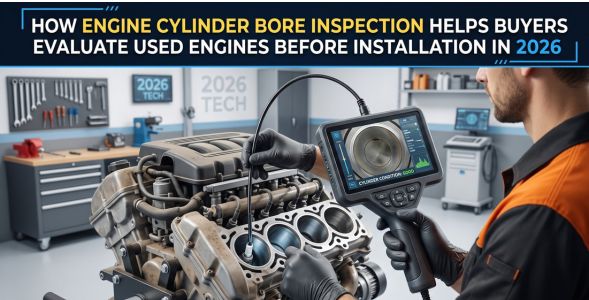
How Engine Cylinder Bore Inspection Helps Buyers Evaluate Used Engines Before Installation in 2026
Buying a replacement engine requires more than checking mileage, appearance, or price. Internal engine condition can significantly affect reliability and installation results, making cylinder bore inspection an important part of the evaluation process. Buyers comparing salvage engines for sale or looking for quality used engines can use cylinder bore condition as one of several indicators when assessing whether an engine is suitable for a vehicle in 2026.
What Is an Engine Cylinder Bore?
The cylinder bore is the precisely machined internal surface of an engine cylinder where the piston moves up and down. Its diameter, surface condition, roundness, and overall integrity influence piston movement, compression, lubrication, and combustion performance.
Because the piston and piston rings operate directly against the cylinder wall, damage or excessive wear in this area can affect the engine’s ability to operate efficiently. A proper inspection can therefore reveal issues that may not be obvious from the engine’s exterior appearance.
Why Cylinder Bore Inspection Matters
Used engines have different operating histories. Some may have accumulated high mileage, while others may have experienced overheating, poor lubrication, contamination, or extended periods of demanding operation. Cylinder bore inspection can help identify conditions such as:
- Scoring
- Scratches
- Excessive wear
- Corrosion
- Surface damage
- Abnormal discoloration
- Irregular wear patterns
Identifying these issues before installation can help buyers make more informed purchasing decisions.
How Bore Wear Develops
Cylinder bores experience continuous friction as pistons and rings move during engine operation. Over time, inadequate lubrication, contaminated oil, overheating, or normal wear can affect the cylinder surface.
Wear may also become more pronounced if an engine has experienced poor maintenance. An inspection can help determine whether the bore surface appears consistent with acceptable operating condition or whether additional testing may be necessary.
Checking Cylinder Bore Surface Condition
A visual inspection can provide useful information about the cylinder walls. Technicians may look for obvious scoring, rust, pitting, cracks, or unusual surface marks. However, visual inspection alone cannot identify every potential problem.
Professional evaluation may involve specialized measuring equipment to determine whether cylinder dimensions remain within the manufacturer’s specified tolerances. This distinction is important when evaluating quality used engines, because a clean-looking engine does not automatically mean its internal components are within specification.
Measuring Bore Diameter and Taper
Cylinder bores are manufactured to precise dimensions. With use, the bore may develop wear patterns that change its geometry. Technicians can measure the bore at different locations to check for conditions such as:
- Diameter variation
- Taper
- Out-of-round conditions
- Localized wear
If measurements fall outside appropriate specifications, the engine may require machining, rebuilding, or replacement of affected components.
For buyers considering salvage engines for sale, obtaining information about internal measurements can therefore be valuable when available.
Understanding Cylinder Wall Scoring
Scoring appears as scratches or grooves along the cylinder wall. Minor surface marks may have different implications from deep or extensive damage. Severe scoring can interfere with piston-ring sealing and increase oil consumption. It may also affect compression and contribute to unwanted engine noise or performance problems.
The severity of any scoring should be evaluated by a qualified technician rather than judged solely from photographs.
Bore Condition and Compression
Cylinder bore condition has a direct relationship with piston-ring sealing. If the cylinder surface or geometry is significantly worn, the piston rings may not seal combustion gases effectively. Poor sealing can contribute to reduced compression, increased oil consumption, and inefficient combustion.
For this reason, cylinder inspection can complement other evaluation methods such as compression testing and leak-down testing. No single inspection method should be treated as proof of complete engine health.
The Importance of Honing Patterns
Many engine cylinders have a specific surface finish created during manufacturing or machining. Honing produces a controlled pattern that helps retain lubricant while supporting proper piston-ring seating.
An abnormal or heavily worn surface may indicate previous use or mechanical problems. When inspecting a used engine, technicians should consider the overall condition of the cylinder wall rather than focusing on one visual characteristic alone.
Detecting Corrosion and Storage Damage
Used engines may sometimes remain in storage before being sold or installed. Improper storage conditions can expose internal surfaces to moisture and corrosion. Cylinder walls can be particularly vulnerable because they are precision-machined surfaces.
Rust, pitting, or corrosion inside the cylinders should be carefully evaluated before installation. Proper storage procedures and preservation methods can help reduce these risks.
Why Professional Inspection Is Valuable
Engine inspection requires more than checking whether an engine starts or looks clean. A professional technician can combine multiple evaluation methods to create a more complete assessment.
These may include:
- Visual inspection
- Bore measurement
- Compression testing
- Leak-down testing
- Oil inspection
- Cooling-system checks
- Crankshaft inspection
- Diagnostic testing where applicable
Combining these checks provides a stronger basis for determining whether an engine is appropriate for a particular vehicle.
Cylinder Bore Inspection When Buying Salvage Engines
Buyers researching salvage engines for sale should pay particular attention to the engine’s history and inspection documentation.
A salvage engine may have been removed from a vehicle because of collision damage rather than an internal mechanical failure. However, its condition still needs to be verified before installation.
Ask the seller about:
- Engine mileage
- Vehicle history
- Running condition
- Inspection results
- Storage history
- Warranty coverage
- Compatibility information
Clear documentation can make the buying process more transparent.
How Bore Inspection Supports Better Buying Decisions
A replacement engine represents a significant investment in vehicle repair. Discovering serious internal wear after installation can lead to additional labor and repair costs. Cylinder bore inspection can help reduce uncertainty by providing information about one of the engine’s most important internal operating surfaces.
When combined with verified vehicle compatibility, engine history, testing records, and warranty information, it can help buyers distinguish between questionable units and quality used engines.
Final Thoughts
Engine cylinder bore inspection is an important part of evaluating a used engine before installation. Examining bore surface condition, measuring dimensions, checking for scoring and corrosion, and assessing wear patterns can reveal potential issues that may not be visible from the outside.
Whether comparing salvage engines for sale or searching for quality used engines, buyers should consider cylinder bore condition alongside compression results, engine history, compatibility, inspection records, and warranty coverage. A comprehensive evaluation can help reduce installation risks and support a more confident replacement-engine purchase in 2026.
FAQs
What is a cylinder bore inspection?
It is an examination of the internal cylinder surface and geometry to identify wear, scoring, corrosion, dimensional variation, and other potential problems.
Why is cylinder bore condition important in a used engine?
The cylinder bore works directly with the piston and rings. Excessive wear or damage can affect compression, lubrication, oil consumption, and overall engine performance.
Should buyers inspect salvage engines before installation?
Yes. Buyers considering salvage engines for sale should review available inspection information and, when appropriate, have the engine evaluated by a qualified technician before installation.
Can bore inspection alone confirm engine quality?
No. Bore inspection is only one part of a comprehensive evaluation. Compression testing, leak-down testing, oil inspection, compatibility checks, and engine history can provide additional information.
How can buyers identify quality used engines?
Look for documented engine history, inspection results, compatible specifications, transparent seller information, and appropriate warranty coverage when comparing quality used engines.