



Recent Blogs
- How Engine Oil Analysis Reports Help Buyers Evaluate Internal Wear Before Purchasing a Used Replacement Engine in 2026
- How Engine Piston Ring Seal Inspection Helps Buyers Evaluate Oil Control and Compression in Used Engines in 2026
- How Engine Valve Train Inspection Helps Buyers Evaluate Replacement Engine Condition Before Installation in 2026
- How Engine Serial Number Verification Helps Buyers Confirm Replacement Engine Identity and Compatibility in 2026
- How Engine Cylinder Bore Inspection Helps Buyers Evaluate Used Engines Before Installation in 2026
- How Engine Mount Compatibility Affects Vibration Control and Replacement Engine Performance in 2026
- How Engine Block Inspection Technology Helps Buyers Identify Reliable Replacement Engines Before Purchase in 2026
- How Replacement Engine Bearing Inspection Helps Prevent Premature Wear and Improve Used Engine Reliability in 2026
- How Engine Mount Condition Influences Replacement Engine Vibration, Alignment, and Long-Term Driving Comfort in 2026
- How Engine Timing Chain Condition Influences Replacement Engine Reliability and Long-Term Performance in 2026
Used Engines for Sale
- ACURA Engine
- AUDI Engine
- BMW Engine
- BUICK Engine
- CADILLAC Engine
- CHEVROLET Engine
- CHRYSLER Engine
- DODGE Engine
- FIAT Engine
- FORD Engine
- GMC Engine
- HONDA Engine
- HUMMER Engine
- HYUNDAI Engine
- INFINITI Engine
- ISUZU Engine
- JAGUAR Engine
- JEEP Engine
- KIA Engine
- LANDROVER Engine
- LEXUS Engine
- LINCOLN Engine
- MAZDA Engine
- MERCEDES Engine
- MERCURY Engine
- MINI Engine
- MITSUBISHI Engine
- NISSAN Engine
- OLDSMOBILE Engine
- PONTIAC Engine
- PORSCHE Engine
- SAAB Engine
- SATURN Engine
- SCION Engine
- SUBARU Engine
- SUZUKI Engine
- TESLA Engine
- TOYOTA Engine
- VOLKSWAGEN Engine
- VOLVO Engine
Used Engines for Sale
View More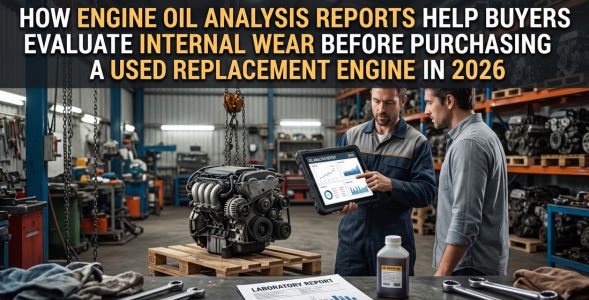
How Engine Oil Analysis Reports Help Buyers Evaluate Internal Wear Before Purchasing a Used Replacement Engine in 2026
Buying a used replacement engine requires careful evaluation of its condition, maintenance history, and compatibility with the intended vehicle. While exterior inspections can reveal visible damage or fluid leaks, they cannot always identify internal wear. Engine oil analysis reports provide additional information about contamination, lubricant condition, and potential mechanical problems. Buyers searching for quality used engines can use these reports alongside service records, inspection results, and supplier documentation to make more informed decisions. Understanding how oil analysis works also helps buyers compare oem used auto parts and evaluate replacement engines more confidently in 2026.
What Is an Engine Oil Analysis Report?
An engine oil analysis report summarizes laboratory testing performed on an oil sample. Depending on the testing package, the report may identify wear metals, contaminants, lubricant properties, and signs of abnormal operating conditions.
Engine oil circulates through internal components, including bearings, pistons, and other moving parts. During operation, small amounts of material can enter the oil through normal wear, contamination, or mechanical deterioration.
Laboratory analysis can measure certain substances and compare results with expected ranges or previous samples. However, interpretation requires context, including engine type, oil age, operating conditions, and maintenance history. For used-engine buyers, oil analysis is best treated as one source of condition evidence rather than a guarantee that an engine is mechanically sound.
Why Oil Analysis Matters When Buying a Used Engine
A used engine may look clean externally while having internal wear that is difficult to identify without further inspection. Oil analysis can help buyers investigate potential warning signs before committing to a purchase.
The report may provide information about:
- Wear-related metal particles
- Dirt or other external contaminants
- Coolant contamination indicators
- Oil viscosity and lubricant degradation
- Possible abnormal wear patterns
- Evidence that warrants additional mechanical testing
These findings can help buyers ask more specific questions about an engine’s operating history and maintenance. However, an oil report cannot independently establish the remaining service life of an engine. A favorable result does not rule out every internal defect, particularly when a sample is taken shortly after an oil change or when the engine has not been operated under representative conditions.
Understanding Wear Metals in Oil Reports
Laboratories may measure metals such as iron, aluminum, copper, lead, or chromium, depending on the analysis method and engine design. Different metals can originate from different components, but their presence does not automatically identify a failed part. For example, iron may come from several steel or iron components, while aluminum can originate from various engine parts.
The significance of a result depends on its concentration, the engine’s construction, oil service interval, and comparison with historical samples when available. Buyers should avoid rejecting an engine based on a single isolated reading without expert interpretation. Instead, unusual findings should prompt further questions and, where appropriate, additional mechanical inspection.
Detecting Contamination and Lubrication Problems
Contamination can provide important clues about an engine’s previous operating conditions.
- Coolant Contamination: Certain oil tests can detect indicators associated with coolant entering the lubrication system. Possible causes include gasket failures, cooler leaks, or other internal sealing problems. Confirmation may require additional testing because not every abnormal result identifies the exact source.
- Dirt and External Contaminants: Elevated silicon can sometimes indicate dirt entering through the air intake, although sealants and other sources may also contribute. Buyers should consider the result alongside air-filter condition and maintenance records.
- Oil Degradation: Changes in viscosity, oxidation, or other lubricant properties may suggest extended service intervals, overheating, or unsuitable oil use. These findings need to be interpreted in relation to the lubricant specification and service history.
Recognizing these warning signs can help buyers determine whether further evaluation is needed before purchasing a replacement engine.
Combining Oil Analysis With Other Engine Inspection Methods
Oil analysis works best when combined with practical mechanical checks. Buyers evaluating quality used engines should consider requesting multiple forms of evidence when available.
- Compression testing: Helps evaluate cylinder sealing, although results depend on testing conditions and engine design.
- Leak-down testing: Can help identify leakage through valves, piston rings, or other sealing areas.
- Visual inspection: May reveal oil leaks, damaged connectors, corrosion, or signs of poor maintenance.
- Diagnostic scanning: For electronically controlled engines, stored fault codes and available operating data may reveal issues that deserve investigation.
- Service and mileage records: Help establish maintenance history and provide context for the engine’s reported condition.
Not every seller can provide every test, especially for an engine that has not been installed or run recently. Buyers should ask which inspections were actually performed and request supporting documentation rather than assuming that every engine has undergone comprehensive testing.
Choosing OEM Used Auto Parts From a Reliable Supplier
When comparing oem used auto parts, buyers should evaluate more than the component’s original-equipment status. Compatibility, condition, documentation, and warranty terms also influence the value of a purchase.
Before ordering a replacement engine, verify the engine code, vehicle year, make, model, displacement, and relevant configuration details. Similar-looking engines may differ in sensors, wiring, emissions equipment, or control-system requirements.
Ask the supplier about the engine’s source, available test results, mileage documentation, return policy, and warranty coverage. Warranty conditions vary, so confirm what is covered and whether installation must be completed by a qualified professional. A supplier who communicates clearly about testing limitations and provides verifiable documentation can help buyers make better-informed decisions.
How to Use Oil Analysis Reports Before Purchase
Follow a straightforward evaluation process:
- Request the original oil analysis report and confirm which engine the sample came from.
- Ask when the sample was collected and how long the oil had been in service.
- Review unusual findings with a qualified mechanic or oil-analysis specialist.
- Compare the report with inspection results, service records, and any available diagnostic data.
- Investigate unresolved warning signs before finalizing the purchase.
- Confirm engine compatibility and warranty conditions in writing.
If no oil sample or report is available, do not assume the engine has passed oil analysis. Use other appropriate inspection methods and account for the remaining uncertainty when evaluating the purchase.
Final Thoughts
Engine oil analysis reports can give used-engine buyers valuable information about lubricant condition, contamination, and possible internal wear. Their greatest value comes from combining laboratory findings with mechanical inspections, maintenance records, and reliable supplier documentation.
Whether comparing quality used engines or sourcing oem used auto parts, buyers should evaluate the full evidence available instead of relying on a single test or sales claim. A structured assessment can help reduce uncertainty, improve purchasing decisions, and support a more dependable replacement-engine installation in 2026.
Frequently Asked Questions
Can an oil analysis report confirm that a used engine is good?
No. It can reveal certain wear and contamination indicators, but it cannot detect every mechanical defect or guarantee future reliability.
Which metals are commonly checked in engine oil analysis?
Depending on the test, laboratories may measure iron, aluminum, copper, lead, chromium, and other elements. Results must be interpreted according to engine design and operating history.
Should I buy a used engine if the oil analysis shows elevated wear metals?
Not without further evaluation. Ask a qualified professional to interpret the results and determine whether additional testing is necessary.
What should I check before buying OEM used auto parts?
Verify compatibility, condition, available inspection records, mileage information, return terms, and applicable warranty coverage.
What if the seller cannot provide an oil analysis report?
Request other available evidence, such as compression or leak-down test results, service records, and inspection documentation. Understand that missing test information increases uncertainty.